


Voltage High Society
The game sells atmosphere so strong that players forgive the mechanics fighting them.
Voltage High Society is a first-person melee metroidvania set on a decaying prison island, where you unlock new combat abilities and weapons to navigate interconnected zones. Combat uses independent left and right hand controls, allowing you to dual-wield tools and weapons. The game features low-poly PS1-era visuals with modern lighting, inspired by Tetsuo: The Iron Man and Escape from New York.
Voltage High Society's official framing emphasizes a cohesive cyberpunk metroidvania with PS1 aesthetics and dual-hand combat mechanics, and this is precisely what players experience — but the game's real anchor is its uncompromising atmosphere, which forgives technical roughness in ways that purely mechanical games cannot.
The sampled reviews show consistent positive reception paired with honest acknowledgment of technical debt: players admit problems exist (hitbox clarity, navigation ambiguity, control responsiveness) while continuing to recommend the game, suggesting the atmosphere is functioning as a buffer that absorbs mechanical friction.
Across English, Russian, and Simplified Chinese reviews, the vocabulary of praise centers on aesthetic and atmospheric language (style, vibe, world-building, visual coherence) rather than mechanical language (depth, responsiveness, skill ceiling), indicating that players value what the game is *about* more than how it *plays*.
Russian and Simplified Chinese reviewers consistently note confusion about progression and guidance, yet describe this disorientation as enjoyable rather than frustrating — suggesting the game's deliberate obscurity is readable as intentional design to players in this sample, rather than accidental incompleteness.
The sampled reviews identify a consistent technical barrier: the game does not clearly communicate enemy vulnerability states, hit registration, or combat feedback. Multiple reviewers describe enemies as behaving erratically, hitboxes as weird, and attack communication as ambiguous. Additionally, the map is described as 'a nightmare' to navigate without a player position marker, creating frequent confusion about location during exploration. One reviewer with early access experience reports that this design persists across versions; another explicitly quit after 15 minutes of disorientation in the opening area. However, the pattern in positive reviews suggests that players who persist past the initial confusion reconcile with it as part of the game's intended style rather than treating it as a blocking problem.
See the game in motion.
You're sentenced to Nemo Ultra, a decaying prison island infested with cybernetic horrors. Voltage High Society is a first-person cyberpunk metroidvania with locked doors, ability gates, backtracking, shortcuts, and boss fights. Combat uses independent hand controls; you can dual-wield weapons and tools to carve a path through enemies. Gain new combat moves by embracing the island's metal plague through body modification.
Players describe this game as a stylistic experience first and a mechanical one second. The recurring pitch centers on the atmosphere, visual coherence, and world-building — Tetsuo meets System Shock meets PS1-era survival horror. Combat is acknowledged but often qualified: the style carries harder than the mechanics, atmosphere and design are strong enough to forgive technical problems, the world feels inhabited and hostile in ways that reward paying attention. Technical roughness is named directly in positive reviews but does not seem to be the primary reason players engage. The game is sold as a complete experience for players who can tolerate ambiguity in progression and can read enemy behavior from visual cues rather than explicit feedback systems.
“other things that aren't entirely like this game but also aren't entirely dissimilar: Silent Hill 1, Breakdown, licking an electric socket during a salvia trip, MadWorld”
“And will protect them to the ends of the earth and back”
“Skeletons Kicked My Ass, so I punched them.”
“[h1]In a world where electrified skeletons kick your motherboard![/h1]”
Sentences extracted from highest-voted public Steam reviews. Unedited.
48 public Steam reviews analyzed across 3 languages.
Synthesized from public Steam reviews. Not affiliated with Valve Corporation.
Player-language signals, not generic review scores.
Best for
- —Players who crave atmosphere and world-building over polished mechanics, and who are comfortable with games that demand observation and environmental literacy rather than explicit guidance.
- —Fans of body horror, industrial design, and cyberpunk aesthetic who prioritize visual and audio coherence over technical precision.
- —Explorers comfortable with aimless navigation and willing to construct their own understanding of progression through trial and spatial memory.
English reviews represent the largest sample and show the widest range of perspectives, from players who completed the game and loved the experience to those who quit within 15 minutes due to control or navigation friction. A pattern emerges: higher-engagement reviewers emphasize atmosphere, art, and world-building; lower-engagement reviewers focus on mechanical clarity, hit feedback, and guidance. This suggests English-speaking players are explicitly trading off mechanical precision for aesthetic immersion, rather than accepting both.
Russian reviews show a distinct pattern of embracing confusion as part of the experience rather than fighting it. Multiple reviewers note they 'understood nothing' initially but found the disorientation enjoyable — the strangeness becomes the attraction. Additionally, Russian reviewers consistently emphasize audio design and soundtrack moments (chasing crows, club music, facility ambience) as memorable anchors, whereas English reviews tend to emphasize visual coherence. This suggests Russian players may be reading the game as a sensory experience more holistically than English players, who engage it more as a mechanics puzzle wrapped in aesthetic.
More games with overlapping community patterns.
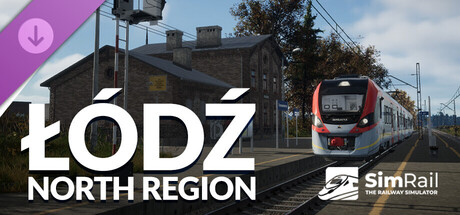
SimRail - The Railway Simulator: Łódź North Region
Single-track lines teach you what double-track hides.

Din's Champion
The world doesn't wait for you—it just doesn't need your town-building to prove it.

Shelve the Potions!
You're not organizing potions. You're solving the puzzles hidden in a witch's workshop, then putting the bottles away.
Deep editorial analysis
Voltage High Society arrives at a specific paradox: its combat is loose, its controls need work, its map can feel labyrinthine, and yet players across English, Russian, and Simplified Chinese reviews consistently report finishing it, exploring it, and recommending it to others. The disconnect isn't accidental.
The official description sets expectations for a mechanics-driven metroidvania — dual-hand combat, ability gating, boss tests. And the game delivers those things. But in the analyzed reviews, what actually stops players from quitting is not the mechanical precision of the combat or the elegance of the progression. It's the aesthetic coherence of the world.
Repeated across the sample: players invoke Tetsuo: The Iron Man, System Shock 2, Condemned, Blame!, and Cruelty Squad. These aren't just visual references — they're a shared vocabulary for a specific kind of body horror and industrial decay that the game sustains across every screenshot. The sampled reviewers describe low-saturated, gray and metallic, dirty and bloody imagery that feels both mechanic and organic, dystopian and surreal. This visual and sonic consistency creates a compulsion that outlasts mechanical friction.
Where the game struggles — jittery enemies, inconsistent hit communication, wonky hitboxes, sparse visual feedback, camera smoothness, mouse sensitivity imbalance, lack of visual clarity — these are real problems that multiple reviewers independently identify. But they don't appear to be the reasons players stop. Instead, the sampled reviews show a pattern: players acknowledge the technical debt while continuing to engage, repeatedly noting that the atmosphere carries the experience through its rough edges.
The game benefits from early access context. Players in the sample appear to have calibrated expectations downward, understanding that a solo developer project in active development will have rough edges. This is not universal forgiveness — several negative reviews explicitly state they cannot tolerate the control problems. But across the current review set, the sampled consensus is that the atmosphere is large enough to contain the mechanical problems without the game collapsing.
In Russian reviews, the pattern intensifies. Reviewers praise specific sensory moments — the soundtrack paired with environmental details, the level design layering — and note that initial disorientation transforms into enjoyment. A recurring observation is that the game's deliberate vagueness about progression became the draw rather than a barrier. Simplified Chinese reviewers similarly describe exploration as exploratory without explicit guidance, yet the visual novelty sustains curiosity enough to persist through unclear navigation.
The honest objection that recurs: the game is not always clear about what to do, where to go, or how to read enemy signals. Players describe the map as difficult to navigate without position markers, the progression as requiring trial and error, the combat communication as opaque. One reviewer with 11 hours played couldn't figure out the early progression and quit. But this same barrier doesn't appear in the highest-voted reviews — suggesting that players who can tolerate exploration without guidance continue; those who cannot, leave quickly. The game doesn't resolve the problem for non-persistent players; they self-select out.
What makes this relevant is that Voltage High Society is not selling clarity, efficiency, or polished responsiveness. It's selling a world that feels inhabited before you arrive, hostile in specific ways that reward observation, and stylistically consistent enough that you'll want to know what's next. The loose controls and opaque progression become part of what the world is — not a bug, but the price of admission. This is a high-risk strategy that works only if the atmosphere is real. In this sample, it is.
Signal data
% positive reviews
Under-the-radar potential
Store framing vs player language
Voice and personality in reviews
Would a stranger click buy?
222 reviews currently indexed
48 analyzed · english, russian, schinese
Last synthesized: Jul 8, 2026 · 48 reviews in that synthesis
Review sampling, evidence boundaries and public-signal methodology.
Frequently asked
Yes. The game features NPCs, occasional voice-acted character encounters, and environmental storytelling throughout the island. Some reviewers found the narrative compelling; others felt it underdeveloped, though this may be intentional given the game's focus on atmosphere and exploration over exposition.