


Total Chaos Against Apathy
The beat-em-up that proves you don't need options—you need consequences.
A 3D arcade beat-em-up with two-button combat, three weapons, and a dynamic difficulty system that scales based on player performance. Tank controls lock you into positioning decisions; enemies play by the same rules and hit back with equal aggression. Modes include a hand-crafted campaign and an infinite tower.
Total Chaos Against Apathy doesn't hide what it is—the official framing and player language align almost perfectly—but players are discovering something the marketing barely emphasizes: the game is a masterclass in constraint-driven design, where removing options (no dash, no jump, tank controls) creates a clarity of purpose that makes every decision matter.
Tank controls are celebrated as design intention, not friction: eleven of nineteen sampled reviews explicitly mention tank controls as the system that makes positioning matter, with players calling them awesome and identifying them as the constraint that forces clarity.
Learning by playing, not by reading: multiple reviewers note that the game is hard to understand from footage or description but becomes intuitive once played, suggesting the design philosophy is legible only through engagement.
Execution matches intention: across reviews, the pattern is clear that players recognize the developer's stated goal (simplicity, depth, and rejection of apathy-inducing design) and report that the game delivers on it.
No recurring objection appears in the sampled reviews. The analyzed reviews show consistent engagement with the learning curve and challenge without a repeating barrier. Several reviewers acknowledge the game is tough and requires reading the tutorial, but frame that as part of the design rather than a problem to overcome.
See the game in motion.
You will be their Asphyxiant. A high-intensity true arcade action game with a two-button control scheme, hand-crafted stages, and a dynamic difficulty system where rank is a resource that scales challenge and reward. Tank controls, true hitstun, and aggressive enemies that use the same tools against you. The developer's personal note frames it as an argument for constraint-driven combat design against mass-market action games that inspire apathy.
Tank controls and positioning. Not in spite of the difficulty, but as the reason the difficulty matters. The absence of a dash or jump isn't a limitation—it's the architecture that makes every fight a spatial puzzle. Players are also selling the learning curve itself as a feature: understanding the game takes play, and when it clicks, the combat becomes compulsive. The visual style, sound design, and camera work receive consistent praise as supporting the snappy, high-velocity feeling of the combat loop. Players recognize that the developer succeeded at the stated goal of building a game that doesn't inspire apathy.
“I just grabbed it and ended up playing it for hours right away, so I'll probably return back for additional thoughts, but I wanted to capture my initial excitement with this review.”
“Incredibly slick combat and visual style.”
“Let there be more tank controls combat action titles, please!!”
“The lack of evasive options outside of a superjoy, the use of tank control to limit your ability to run around enemies and the consistent and predictable hitstun puts the entire focus of the combat on positioning, spacing and crowd control.”
Sentences extracted from highest-voted public Steam reviews. Unedited.
19 public Steam reviews analyzed across 1 language.
Synthesized from public Steam reviews. Current review sample is english-only, so this analysis focuses on shared player language rather than cross-cultural contrast. Not affiliated with Valve Corporation.
Player-language signals, not generic review scores.
Best for
- —Players who love beat-em-ups and are tired of games that reward constant repositioning over positioning discipline.
- —People who enjoy learning systems through play rather than explanation, and who appreciate design that respects their time by removing unnecessary options.
- —Arcade enthusiasts who want a game that feels fast and responsive without holding their hand.
More games with overlapping community patterns.
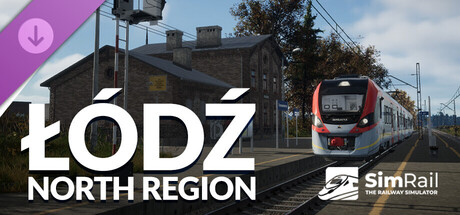
SimRail - The Railway Simulator: Łódź North Region
Single-track lines teach you what double-track hides.
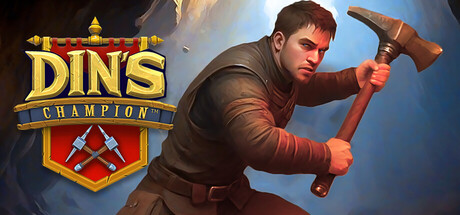
Din's Champion
The world doesn't wait for you—it just doesn't need your town-building to prove it.
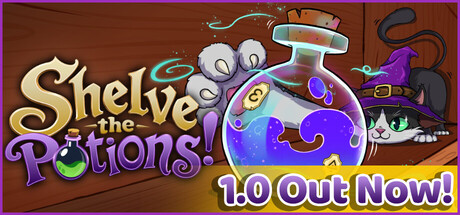
Shelve the Potions!
You're not organizing potions. You're solving the puzzles hidden in a witch's workshop, then putting the bottles away.
Deep editorial analysis
The official description nails most of what Total Chaos is: high-intensity arcade action, hand-crafted stages, dynamic difficulty. But what's interesting is that players aren't just agreeing with that framing—they're *emphasizing* the specific constraint that makes it work.
Eleven of the nineteen sampled reviews explicitly mention tank controls, and not as a friction point. They mention it as the thing that makes the game's positioning system sing. One reviewer identifies tank controls as the constraint that limits repositioning and forces the entire focus onto positioning, spacing and crowd control. Another simply calls tank controls awesome. This is unusual. Tank controls are typically described as clunky or dated. Here, players are identifying them as intentional architecture. The game removes the ability to reposition instantly, which means every fight is about reading the arena, predicting enemy placement, and committing to a line. When you can't dash away, the hitstun—which the game guarantees on every hit—becomes your primary tool for controlling the chaos.
Beyond the constraint language, the sampled reviews show consistent engagement with the learning curve. Several reviewers mention that the game is tough, that understanding it requires play rather than observation, and that once the system clicks, it becomes compulsive. One reviewer notes that the game has a real sense of design that is a bit hard to completely grasp just looking at footage, but once you play it the system will feel unique and familiar at the same time. The analyzed reviews show consistent engagement without recurring technical complaints, balance concerns, or scope objections. Players describe the experience of landing combos and moving through the arena with high energy and unconventional language, signaling genuine excitement about the design rather than generic enthusiasm.
What's most striking is that players aren't claiming this is a hidden gem or rough diamond. They're framing it as a game that successfully executed exactly what it set out to do. That's not forgiving rough edges—that's recognizing that the constraints aren't rough edges. They're the entire point.
Signal data
% positive reviews
Under-the-radar potential
Store framing vs player language
Voice and personality in reviews
Would a stranger click buy?
32 reviews currently indexed
19 analyzed · english
Last synthesized: Jul 13, 2026 · 19 reviews in that synthesis
Revlize indexed this signal before it reached scale.
7/13/2026 · 20 reviews
32 reviews
+60% · +12
Why it entered the radar: hidden gem.
This timeline records correlation only. Revlize does not claim to have caused later growth.
Review sampling, evidence boundaries and public-signal methodology.
Frequently asked
Three playable weapons: Cleaver (rapid combos), Cannon (ranged shots), and Scythe (slow high-damage swings). Each has unique burst moves and combos.