


The Office Void
Playing alone at night in your own office is the hook — the creatures are just the excuse.
The Office Void is a short, narrative-driven horror experience where you play an exhausted IT worker managing coffee intake and caffeine-dependent hallucinations during an overnight shift. As sleep deprivation deepens, the office transforms from mundane workspace into a landscape of creeping, whispering entities. The game blends resource management (coffee), work simulation (code fixes, reports), and psychological horror into tight, repeatable sessions.
The Office Void sells a specific dread — the hallucinatory collapse of a familiar space — but players are actually investing in the visceral shock of being alone in a quiet office when it suddenly becomes hostile.
Players prioritize atmosphere and isolation over gameplay mechanics: across the reviews, the language centers on feeling scared in a familiar space, not on optimizing coffee or completing tasks.
The game succeeds specifically because it's short and repeatable: reviewers mention playing until morning, replaying to recapture the fear, or playing with friends. Length is not a limitation but part of the design.
Coffee and caffeine become emotional anchors, not just systems: players describe craving coffee after playing, feeling the relief of drinking it, understanding it as the only thing between them and the creeping threat.
No significant barrier emerges from the analyzed reviews. The sampled reviews show consistent engagement without recurring complaints. One player noted sound design could be more developed, but this observation did not prevent continued play or recommend avoidance. The shortness is mentioned only positively or neutrally — players understand it as intentional design for impact rather than incomplete content.
See the game in motion.
You're an exhausted IT worker managing coffee intake and hallucinations during a night shift, fighting creatures born from sleep deprivation while completing work tasks. The game blends coffee simulation, psychological horror, and dark office humor into short, tense sessions.
Players describe exactly what the official description promises, but they're emphasizing one element the marketing mentions only functionally: the isolation. They're not selling the horror as a genre exercise or the coffee as a mechanic. They're selling the moment when being alone in a quiet office stops being neutral and becomes genuinely threatening. The horror and the humor are there, but what players lead with is the atmosphere — the feeling of wrongness in a space they already know.
“Симулятор производства кирпичных заводов имени краснодаригского.”
“You’re sitting alone in the office — and then suddenly… AAAAA!”
“Night shift security guard in the office, though the office is kinda weird.”
“Cool psychedelic stuff, but I probably won’t experience anything like this again.”
Sentences extracted from highest-voted public Steam reviews. Unedited.
27 public Steam reviews analyzed across 2 languages.
Synthesized from public Steam reviews. Not affiliated with Valve Corporation.
Player-language signals, not generic review scores.
Best for
- —Players who appreciate atmosphere over action — the game is as much about sitting still and listening as it is about reacting.
- —Horror fans who respond to isolation and psychological threat rather than gore or jump scares.
- —People who work night shifts, odd hours, or remote jobs — the game speaks directly to the weirdness of being awake when the world is asleep.
English reviews consistently emphasize the visceral moment of fear — using language like 'goosebumps,' 'scared ♥♥♥♥♥♥♥♥,' 'actually scary,' 'nightmare fuel.' Players also engage with the meta-humor of office culture: one notes 'Playing as a clerk — that's future me,' acknowledging the game's satire of night-shift work. The social aspect appears in English reviews: playing with friends amplifies the experience. Coffee is framed as essential and compulsive, not just mechanical.
More games with overlapping community patterns.
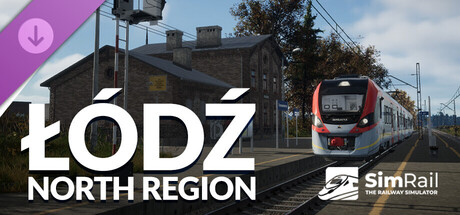
SimRail - The Railway Simulator: Łódź North Region
Single-track lines teach you what double-track hides.

Din's Champion
The world doesn't wait for you—it just doesn't need your town-building to prove it.

Shelve the Potions!
You're not organizing potions. You're solving the puzzles hidden in a witch's workshop, then putting the bottles away.
Deep editorial analysis
The Office Void operates on a single, devastating insight: the night office is already uncanny. It's designed for people awake during hours when it should be empty. The game doesn't invent that discomfort — it notices it, amplifies it, and then fills the silence with things that move.
Players who sat down to this game describe a consistent experience: the first 10 minutes feel almost boring. You're brewing coffee, reading work emails, maybe fixing a bug. The office looks normal. Then the edges of vision start to warp. A shadow that wasn't there. A whisper. The sound design — described repeatedly as crucial, sometimes as lacking — becomes the entire presence of the threat. You can't see the creatures clearly. You hear them.
The genius move is that coffee isn't just a mechanical resource. In the official description it's framed as salvation, and players feel this immediately: each sip is a moment of control, a reset button against the encroaching hallucination. One reviewer noted: Drink coffee or it will eat you. Another: Liked drinking coffee in the game. Now I want to do it too. These aren't mechanical observations. They're describing a compulsion — the game made them crave something they can control.
The reviews cluster around three moments: the setup (sitting alone), the breaking point (when you realize you're actually scared), and the adaptation (playing again because the fear is repeatable, even predictable now). Several players mention playing at night and then being afraid of the dark in their actual room afterward. One played until morning. Another played with friends, and everyone screamed together. This isn't a game that scares through mechanics. It scares through atmosphere and the player's own awareness that they're vulnerable — alone, tired, in a familiar space that feels wrong.
Length is mentioned, never as a complaint. Short, but made me [fear myself] a couple times. Horror at night — not the best idea, but awesome! Players understand the constraint as intentional: this game doesn't need 40 hours. It needs 1–2 nights of your attention, and it will stick with you longer than that.
One reviewer called it cool psychedelic stuff, but I probably won't experience anything like this again. That's not a critique. That's accepting that fear, once named, becomes harder to recreate. The game knows this. It's built for a specific kind of replay: you already know what happens, but you still feel it.
No recurring technical problems appear in the sampled reviews. No performance complaints, no bugs blocking progress. The only hesitation touches sound design — one player noted it's kinda lacking — but even that didn't diminish their engagement. The game's core appeal is visual isolation and the unseen threat, not intricate soundscapes. What the reviews show is complete engagement from opening to end. Players aren't fighting the game. They're fighting their own fear in a space the game recognized as already unsettling.
Signal data
% positive reviews
Under-the-radar potential
Store framing vs player language
Voice and personality in reviews
Would a stranger click buy?
55 reviews currently indexed
27 analyzed · english, russian
Last synthesized: Jun 30, 2026 · 27 reviews in that synthesis
Revlize indexed this signal before it reached scale.
6/30/2026 · 30 reviews
55 reviews
+83% · +25
Why it entered the radar: niche breakout.
This timeline records correlation only. Revlize does not claim to have caused later growth.
Review sampling, evidence boundaries and public-signal methodology.