


Royalty Free-For-All
The platform fighter that proves you don't need a Nintendo license to make something worth playing.
A platform fighting game featuring public domain characters like Lancelot and Mother Goose, rendered in hand-drawn 1930s cartoon style with remixed public domain music. It prioritizes accessibility and movement-focused combat over complex movesets, includes both competitive and party modes, and supports online play with rollback netcode.
Royalty Free-For-All sells exactly what it advertises—a joyful, stripped-down platform fighter with public domain characters—and players love it for precisely that reason, with no significant gap between official framing and community enthusiasm.
The sample consistently praises the visual and conceptual execution—the 1930s cartoon art style, the choice of public domain characters, and the music—as the primary draw, with positive reviews spending more language on what the game looks like than what it plays like.
Players repeatedly frame simplicity as a feature rather than a limitation, noting that reduced movesets and controls free up movement-focused gameplay and make the game accessible without sacrificing fun for experienced players.
No recurring technical or design complaints appear in the analyzed reviews beyond acknowledged launch-window issues (lag in arcade mode, occasional connection problems, one crash-on-startup report). Positive reviewers explicitly forgive rough edges as launch-phase friction.
The simplified movesets limit both character identity and long-term competitive appeal. Several reviews note that most characters have only four or five distinct attacks, and wavedashing (the main competitive tech) is normalized so much that it removes meaningful mechanical variation. One reviewer directly states the game doesn't know if it wants to be competitive or a party game—and that tension, while deliberate, creates a gap for players seeking either extreme.
See the game in motion.
A platform fighter starring public domain characters with hand-drawn cartoon aesthetics, simplified controls for newcomers, and competitive tech (wavedashing, moonwalking) available for genre veterans. Features online quickplay with rollback netcode, customizable rulesets, and party modes that keep eliminated players in the action.
A charming, beautifully animated platform fighter that proves the public domain is fun when treated with actual affection instead of irony. Players highlight the 1930s cartoon aesthetic and the way the game balances accessibility (simple controls, low APM requirements) with decision-making depth (movement tech, character variety). Multiple reviewers note it's the most forgiving entry point into platform fighting they've encountered, while others appreciate that it doesn't try to out-Smash Smash.
“I'd recommend it if you play platform fighters and want to try something different.”
“Like many others, I like the concept of a platform fighter based on public domain characters.”
“Game is a complete mess, it doesn't know whether it wants to be competitive or a party game.”
“It's a lovely little platform fighter with plenty of the homages that come with playing in that genre,”
Short verbatim excerpts selected from the analyzed public Steam review sample for their relevance to the analysis above.
24 public Steam reviews analyzed across 3 languages.
Synthesized from public Steam reviews. Not affiliated with Valve Corporation.
Player-language signals, not generic review scores.
Best for
- —New players to platform fighters who want to learn without APM gatekeeping.
- —Party game enthusiasts who want local multiplayer with actual fighting game mechanics underneath the chaos.
- —Players who appreciate aesthetic coherence and want a game that celebrates public domain IP rather than exploiting it.
More games with overlapping community patterns.
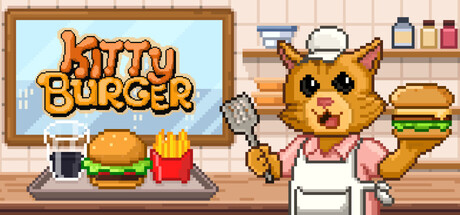
Kitty Burger
There is high replay value thanks to different endings, reviewers say.
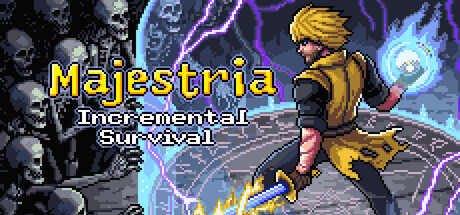
Majestria: Incremental Survival
Stop aiming. Start watching your build evaporate the horde.

DCS: F-14B(U) by Heatblur Simulations
The Tomcat gets the systems it should have always had, and Heatblur proves that delayed promises are worth the wait.
Deep editorial analysis
The game's real victory isn't mechanical depth—it's aesthetic coherence. Every design choice reinforces the same idea: public domain characters deserve to be celebrated, not parodied. The hand-drawn art, the remixed music, the character roster itself all declare the same thing: these stories belong to everyone now.
Player framing aligns with developer intent in a way that's rare for platform fighters: the community doesn't just accept the simplified movesets and controls—they celebrate the choice as liberation. The sampled reviews show players treating reduced complexity as a gateway to movement-focused play rather than a loss. This reframing matters. A four-attack roster becomes an invitation to master wavedashing and spacing instead of memorizing frame data. The tension between party and competitive appeal, which some reviewers note, reflects the game's actual design goal: make fighting games feel like play again, not grind.
The honest limitation is real: character identity suffers when movesets are minimal, and long-tail competitive depth doesn't match Smash or Brawlhalla. But the sample shows players choosing the game they got over the game they might have wanted. Mechanical restraint isn't weakness—it's the design surface that lets charm and accessibility do the heavy lifting.
Signal data
% positive reviews
Under-the-radar potential
Store framing vs player language
Voice and personality in reviews
Would a stranger click buy?
51 reviews currently indexed
24 analyzed · english, french, spanish
Last synthesized: Aug 12, 2026 · 24 reviews in that synthesis
Revlize indexed this signal before it reached scale.
8/12/2026 · 51 reviews
51 reviews
+0% · +0
Why it entered the radar: hidden gem.
This timeline records correlation only. Revlize does not claim to have caused later growth.
Review sampling, evidence boundaries and public-signal methodology.
Frequently asked
Yes. The game includes a party mode that warps out-of-bounds players across the screen instead of eliminating them, making it specifically designed for group play. Multiple reviewers highlight party mode as a standout feature.
The game uses rollback netcode for smoother online matches. Some reviewers noted connection lag in arcade mode at launch, but the quickplay system for 1v1 matches is generally well-received.