


Return to Lumia
A game that seems boring but keeps you playing for 60 hours before you notice the time.
Return to Lumia is a 2D mining sandbox RPG where you dig for resources, craft equipment, and progressively unlock dungeons and rebuild a ruined town. Progression feels gradual but intentional; even players new to the genre report losing entire sessions to the loop of gathering, upgrading, and venturing deeper.
Return to Lumia's official pitch is a mining-crafting restoration game, and that's exactly what players experience—but what keeps them playing for 60+ hours is not the checklist of features, it's the strange addiction of incremental growth wrapped in a world so big that preparation itself becomes the reward.
Across all three language samples, players report a disconnect between initial skepticism and eventual addiction: they expected a slow game and found one, but the game's rhythm of preparation and incremental growth converted them anyway.
Korean reviews specifically emphasize world scale and preparation variety (building towers, crafting weapon tiers, choosing loadouts for exploration), suggesting that the breadth of options creates a sense of player agency within the mining loop.
English-language reviews foreground the compulsion loop and admit surprise at how a 'non-exciting' game mechanics-wise became a 60-hour commitment—the addiction is structural, not surface-level.
No recurring barrier appears in the sampled reviews. All seven reviews are positive, and even the player who noted the game seems boring framed that as part of its appeal rather than a flaw. The closest thing to friction is the acknowledged slow start—players explicitly warn newcomers to invest time in logging and mining before the deeper systems reveal themselves—but no sampled reviews treat this as a design problem.
See the game in motion.
Return to Lumia is a 2D mining sandbox RPG where you grow through mining and crafting, conquer dungeons and bosses, and restore your ruined hometown. The game emphasizes deep exploration, crafting progression, NPC relationships, and relaxing life activities like fishing and building.
Players frame this as a deceptively addictive game that starts slow and directionless but gradually becomes compulsive. Multiple reviewers emphasize vastness, ease of entry for non-genre players, and the meditative satisfaction of incremental growth. The Korean curator community specifically compares it to Terraria and highlights the joy of preparing for exploration (gathering resources, building equipment, constructing cannon defenses). Players admit to losing 60+ hours unexpectedly and describe themselves as falling into the world rather than being gripped by excitement. The official description and player framing align on the core loop; players validate the feature set but emphasize that the appeal is subtler than the marketing suggests—it's in the rhythm of preparation, not in the spectacle of boss fights.
“맵이 광할하고 넓으며, 갈곳도 많고 할 것도 많은 게임입니다.”
“A game that seems boring but keeps you playing”
“I got a beta key for this game and figured I'd try it for an hour or two.”
“방대한 크기의 월드를 즐기며 여행하기 위해 다양한 준비를 하는 즐거움이 있습니다.”
Sentences extracted from highest-voted public Steam reviews. Unedited.
7 public Steam reviews analyzed across 3 languages.
Synthesized from public Steam reviews. Not affiliated with Valve Corporation.
Player-language signals, not generic review scores.
Best for
- —Players new to mining/crafting genres who want low-barrier entry and forgiving progression.
- —Solo explorers and experimenters who enjoy open-ended preparation and discovery without time pressure.
- —Incremental-game enthusiasts who value the dopamine of gradual upgrades and the permission to spend hours optimizing a single system.
Korean reviews emphasize world vastness and preparation variety—the joy of gathering diverse resources, building multiple cannon defenses, and choosing loadouts before exploration. They frame this not as grinding but as healing while harassing monsters, suggesting a more tactile engagement with systems compared to English reviews, which focus on the compulsion loop itself. Korean curators explicitly position it as a Korean-made alternative to Terraria with superior progression accessibility.
More games with overlapping community patterns.
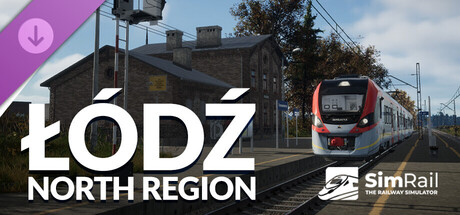
SimRail - The Railway Simulator: Łódź North Region
Single-track lines teach you what double-track hides.

Din's Champion
The world doesn't wait for you—it just doesn't need your town-building to prove it.

Shelve the Potions!
You're not organizing potions. You're solving the puzzles hidden in a witch's workshop, then putting the bottles away.
Deep editorial analysis
Return to Lumia lands in a weird space: the official description is accurate—you do mine, craft, and restore a town—but it doesn't explain why that loop is so adhesive. Players who started skeptical or genre-naive all report the same shock: the game plays boring. It announces itself as a relaxing sandbox with life activities, exploration, and boss dungeons. Then something happens around hour 5 or 10. The incremental upgrades start to feel earned. The preparation for each new area becomes its own mini-game. One player called it a game that seems boring but keeps you playing—not because the marketing lied, but because the game's actual appeal is quieter than its feature list. You're not chasing dopamine hits; you're chasing the specific satisfaction of standing in front of a new ore vein and knowing, with certainty, that your current pickaxe can handle it. Players describe the world as vast—one Korean review used words like 광할하고 넓으며 (expansive and broad)—but the vastness isn't a barrier; it's a permission structure. You can spend two hours in one corner and still have a whole unexplored world waiting. The game seems designed to let you fail softly. Early reviews mention that even players who aren't good at games could feel like they've grown as much as they put in effort. That's not a marketing line; that's a design philosophy that shows up in how the game gates progression—logging and mining, according to multiple reviews, are the foundations, and once you understand those two mechanics, the game becomes a matter of investment, not mechanical skill. The atmospheric and emotional payoff is real, too. Players mention immersive art, a world that feels like stepping into a painting, and a narrative that stays with you long after you finish. But these observations don't contradict the mining-and-crafting core; they explain why that core works. A beautiful, cohesive world makes the act of gathering resources feel meditative instead of tedious. The discovery signal is distinctive here: players explicitly say they started with low expectations or genre inexperience, then found themselves gradually falling into that world. That's not a marketing pitch; that's a player admitting they were wrong about what would hook them. One English-language review ended with the compulsion loop itself—Maybe I'll just mine a little more ore—which is both funny and sincere. The game isn't selling a fantasy of being a hero or rebuilding civilization. It's selling the quiet obsession of optimization and the permission to spend as much time as you want in a single biome, preparing for something you might not need for hours.
Signal data
% positive reviews
Under-the-radar potential
Store framing vs player language
Voice and personality in reviews
Would a stranger click buy?
9 reviews currently indexed
7 analyzed · koreana, english, schinese
Last synthesized: Jun 22, 2026 · 7 reviews in that synthesis
Revlize indexed this signal before it reached scale.
6/22/2026 · 7 reviews
9 reviews
+29% · +2
Why it entered the radar: hidden gem.
This timeline records correlation only. Revlize does not claim to have caused later growth.
Review sampling, evidence boundaries and public-signal methodology.
Frequently asked
Korean reviewers position Return to Lumia as a more accessible, progression-friendly alternative to Terraria. Return to Lumia emphasizes preparation, equipment gathering, and forgiving growth mechanics, while Terraria leans toward combat and building. Return to Lumia's vastness and resource variety give it a different pacing and focus.