


R-Type Tactics I • II Cosmos
You've been waiting 20 years for this. The game remembers why you were.
R-Type Tactics I • II Cosmos bundles two PSP-era turn-based strategy games (R-Type Tactics and R-Type Tactics II) with a new campaign exclusive to this release. The collection spans 100+ hours across multiple faction campaigns with hundreds of ships and branching missions. It's a straight port with visual upgrades to Unreal Engine 5 but minimal quality-of-life modernization.
R-Type Tactics I • II Cosmos sells itself as a content-packed remaster, but players frame it as a 20-year redemption arc—a game they've been waiting for so long that they forgive its refusal to adapt to modern PC sensibilities.
Multiple reviews from players who waited years for this release describe it as emotional homecoming rather than consumer transaction—they're not evaluating the product; they're celebrating its existence.
Across all sampled languages, players who played the originals view the unchanged UI and pacing as fidelity; players new to the series view it as poor design. The game's success is almost entirely audience-dependent.
Chinese and Japanese reviews specifically praise the keyboard-and-mouse adaptability for PC play over handheld, but also note the adaptation is incomplete and UI choices don't leverage mouse controls well.
The interface and pacing feel anachronistic on PC. Saving and loading require closing and reopening the game. Keyboard-and-mouse controls are poorly adapted (multiple reviews). Missions can take 1–2 hours, and turn resolution feels slow—one reviewer describes it as fighting through sludge. These are not recurring crashes or game-breaking bugs; no recurring technical failure appears in the sampled reviews. But the friction between modern PC gameplay expectations and 2004 PSP design is consistent and real.
See the game in motion.
R-Type Tactics I • II Cosmos is a two-game remaster bundle featuring enhanced graphics, quality-of-life improvements to Tactics I (backporting features from Tactics II), and a brand-new post-game story. It includes hundreds of ships, multiple campaigns for both factions, and over 100 hours of content across both titles plus the exclusive Cosmos campaign.
Players frame this as a 20-year reunion. Not here's a remaster with quality-of-life upgrades—but I finally get to own this legitimately again, exactly as I remember it. Chinese players describe paying back a debt (补票). Japanese players describe relief and homecoming. English speakers describe waiting since 2008, tracking the game through delays and international localization limbo, and now finally being alive to play it. The faithfulness to the original design is framed as fidelity rather than laziness. When players mention the slow pacing and tinny audio, they acknowledge these as inherited traits from the PSP era—not as new failures—and often add that the gameplay beneath the aged interface is still worth playing.
“当時何気なく買ったファミ通の付録に付いていたPSP専用のR-typeTacticsの体験版ディスクが出会いだった…”
“This is a full remake of two PSP turn-based strategy games: R-Type Tactics (aka R-Type Command) and R-Type Tactics 2, plus a bonus chapter exclusive to the new release; the entire thing is easily 100+ hours total.”
“For years now, anticipation built up inside me about R-Type Tactics finally arriving on PC now that it's here, relief washes through.”
“2が出てから約20年続編もなく絶望してたところにリメイクとはいえ追加シナリオとDLCが来て嬉しい、純粋に続編の3も出てほしいところ。”
Sentences extracted from highest-voted public Steam reviews. Unedited.
37 public Steam reviews analyzed across 3 languages.
Synthesized from public Steam reviews. Not affiliated with Valve Corporation.
Player-language signals, not generic review scores.
Best for
- —Longtime R-Type franchise fans who owned these games on PSP and want to reclaim them on modern hardware without expecting modernization.
- —Tactics game players who appreciate unforgiving difficulty, long mission runtimes (sometimes 1–2 hours per stage), and the satisfaction of careful positioning over flashy combat.
- —Nostalgic players seeking to return to 2004–2007 game design philosophy, where UI was utilitarian and pacing was deliberate.
Chinese reviews emphasize the localization quality and keyboard-and-mouse adaptation as primary friction points. Multiple reviewers specifically request QoL additions (quick save/load, edge scrolling, keyboard shortcuts) that would modernize the interface for PC play. The framing of this game as '补票' (paying back the debt) is stronger and more consistent in Chinese reviews than in English or Japanese samples, suggesting the legitimacy of ownership is a significant psychological factor. Price is framed as neutral to positive ('cheapest you'll find').
Japanese reviews contain the most explicit emotional language: descriptions of homecoming, 20-year longing, relief at the game's mere existence. The tone is celebratory even when acknowledging unchanged UI and voice quality. Japanese reviewers also provide the most technical detail on gameplay balance and system improvements (resource sharing, carrier deployment changes). The new post-game Cosmos story is treated as emotionally significant by Japanese players in ways English and Chinese reviews do not emphasize. One reviewer notes the forced progression through Tactics I to reach Cosmos content is the primary friction point for progression, but this complaint does not appear recurrently in the Japanese sample.
More games with overlapping community patterns.
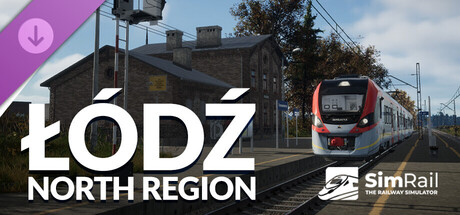
SimRail - The Railway Simulator: Łódź North Region
Single-track lines teach you what double-track hides.
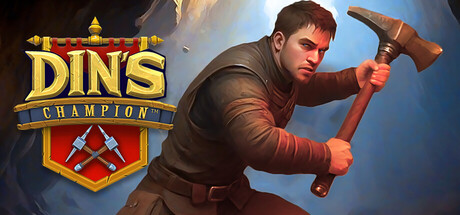
Din's Champion
The world doesn't wait for you—it just doesn't need your town-building to prove it.
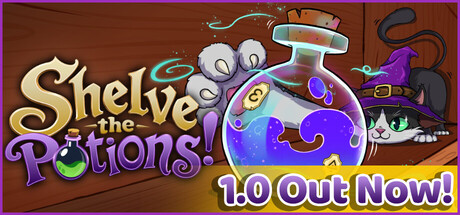
Shelve the Potions!
You're not organizing potions. You're solving the puzzles hidden in a witch's workshop, then putting the bottles away.
Deep editorial analysis
The paradox of R-Type Tactics Cosmos is that it succeeds by doing almost nothing new.
The official description leans on content volume: two full games plus bonus missions, hundreds of ships, branching storylines, a graphics overhaul. Standard remaster marketing. But the actual story in reviews is stranger and deeper. Players don't celebrate what Cosmos added. They celebrate what it didn't remove.
Across all sampled languages, the overwhelming emotional note is relief mixed with recognition. One Japanese reviewer describes finally returning after 20 years of silence: I've come home. My feelings... we go together. A Chinese player writes 补票补票—literally paying back the ticket, a nostalgic idiom for finally buying something you should have owned legitimately. English speakers who held PSPs in 2008 describe hours melting away, waiting for sequels that never came, stumbling onto fan translations of Tactics II, then learning it was finally being officially localized in the West.
This is not a game rebuilt for a new audience. This is a game that said we're keeping the UI exactly as it was, the pacing exactly as it was, even the music quality exactly as it was. And instead of viewing that as a flaw, players interpret it as fidelity. One Japanese reviewer explicitly notes: Graphics became cleaner, but everything else is the memory from back then. That nostalgic feeling hit perfectly. Another: Original taste, completely faithful—even the UI didn't change.
Where friction appears, it's specific and honest. The keyboard-and-mouse adaptation is poor (multiple Chinese reviews flag this). Saving and loading require closing and reopening the game. The UI is slow, the pacing slow, the music tinny. One English player notes: It's slow paced, and the music doesn't help, but the amount of content is astounding, and the gameplay is rewarding once you get past the sludge. Another admits: This game is so slow it takes forever to get a turn done.
But across the sample, these are not dealbreakers. They're acknowledged and absorbed. Why? Because the central appeal isn't modern convenience. It's the permission to return to a specific emotional space. Players waited years for Tactics II to arrive in the West. Many bought the PSP version legitimately or (by their own account) played fan translations. Some spent 150+ hours in preparation for this release. The game's refusal to modernize its interface—its insistence on remaining true to the original design down to the static music quality—reads as respect rather than laziness.
One negative review argues: It took years to take RTT1, an extremely flawed and miserable experience, and make it into the exact same experience but this time in UE5. The complaint is fair. But it also articulates what the positive reviews celebrate. This is not a redesign. It's a time capsule. And for players who were waiting to return to that specific experience, that's exactly the point.
Price framing is neutral in reviews—neither a major draw nor a major objection. One player notes it's the cheapest you'll find these games if you're looking to own them legitimately. Another objects to the $40 price tag given the age of the source material. The disagreement isn't about value; it's about whether returning to an old love is worth the cost. Players who came to reclaim a piece of their past vote yes. Players who expected a modernized product vote no.
The roughest signal involves the forced nature of progression through Tactics I to reach new Cosmos content. One reviewer expresses real frustration: You can't play any of the new content without slogging through all of RTT1. That's a legitimate barrier. But even this complaint doesn't appear as a recurring objection across the sample—it's one player's specific pain point. No recurring structural complaint appears in the sampled reviews beyond pacing and UI feel.
Signal data
% positive reviews
Under-the-radar potential
Store framing vs player language
Voice and personality in reviews
Would a stranger click buy?
93 reviews currently indexed
37 analyzed · english, schinese, japanese
Last synthesized: Jun 21, 2026 · 37 reviews in that synthesis
Revlize indexed this signal before it reached scale.
6/21/2026 · 39 reviews
93 reviews
+138% · +54
Why it entered the radar: unexpected depth.
This timeline records correlation only. Revlize does not claim to have caused later growth.
Review sampling, evidence boundaries and public-signal methodology.
Frequently asked
Players report 100–155+ hours depending on branching paths and difficulty selection. Single missions can exceed 1 hour.