


Master Healer Kale with useless party
You're Not Babysitting. You're Engineering a Broken Party Into a Machine.
Master Healer Kale is a 4–6 hour incremental autobattler where you play as a healer supporting three incompetent companions through 16 dungeons. You cast spells to heal, buff, and enable damage while upgrading abilities through a 200+ node skill tree. The joke is the title: your party isn't useless, but discovering how to make them work is the game.
Master Healer Kale's official framing emphasizes keeping a useless party alive, but players consistently report the opposite: you're managing a healer with genuine tactical depth, and the party isn't useless at all—the game is about building synergies that turn weakness into strategy.
Across the sampled reviews, control and choice consistently emerge as the satisfaction signal: players want to feel they're making meaningful decisions in spell selection and build pathing, and they report this pressure exists even in normal difficulty when not overgrinding
The price-to-content framing is uniformly positive; reviewers explicitly note the game is 'short but complete' rather than 'short and unfinished,' and at under $5 this positioning resonates strongly with the incremental game audience who expect value clarity
Language-specific nostalgia appears in French and English reviews from former MMO healers: they recognize the specific fantasy of reactive support and identify this game as delivering on a niche that rarely gets dedicated content
The spell-freeze bug reported by a minority of players in late-game scenarios represents a genuine progression blocker, though the analyzed sample shows this as an outlier issue rather than a widespread technical failure. Beyond that, no recurring design complaint appears in the sample. The most consistent honest observation is that the game is short—by design—which some players wish was longer, but this is framed as appetite for more rather than incompleteness.
See the game in motion.
Play as Kale the Master Healer accompanying a sleeping tank, a newbie archer, and a toxic mage to defeat the Demon King. Heal and buff your party, upgrade abilities through a massive skill tree, defeat bosses, and enjoy about 4 hours of gameplay. The tagline is that your party is useless, but ultimately proves otherwise.
Players describe this as an incremental game wearing a healer-support skin, built with enough tactical depth that spell selection and timing matter even when you're grinding. The unofficial positioning is what if you played the healer role in an MMO, but the whole game was about that. They're selling nostalgia for anyone who mained support in WoW or FFXIV, precision in spell timing, a skill tree that doesn't feel bloated, and a complete 4–7 hour experience for $4–5. They emphasize it's short but satisfying, with no mandatory endgame padding.
“+ Alot of content ( around 8 hours 100% )”
“Seuls ceux qui endossaient le rôle de heal dans des mmorpg connaissent le plaisir de voir des barres de vie descendre et avoir le pouvoir de les remonter.”
“Simple but well executed autobattler where you play as the healer.”
“I have played a lot of cheap incremental games over my gaming career, and a lot of them start to feel samey and uninspired over the past year.”
Sentences extracted from highest-voted public Steam reviews. Unedited.
60 public Steam reviews analyzed across 3 languages.
Synthesized from public Steam reviews. Not affiliated with Valve Corporation.
Player-language signals, not generic review scores.
Best for
- —MMO players who mained healer roles and want to experience that fantasy in a contained, replayable form
- —Incremental game enthusiasts specifically looking for something with active gameplay mechanics rather than pure idle progression
- —Players seeking a 4–6 hour completion game that respects the short time commitment and doesn't artificially extend content
English-language reviews contain the most explicit MMO nostalgia, with players drawing direct parallels to WoW, FFXIV, and EverQuest healer experience. This group emphasizes the precision and reactivity required in support roles and identifies those specifics as the game's core appeal. They also more frequently mention the skill tree's creative design and the satisfaction of discovering unexpected synergies. The bug reports (spell freezing in late-game) appear in English reviews only within this sample.
German reviewers emphasize the casual play structure and lack of mandatory grind more explicitly than other language groups, positioning the game as something you can finish comfortably in 7 hours without farming fatigue. They highlight the price-to-content ratio consistently and express appetite for additional difficulty modes, suggesting they completed the game and wanted more challenge rather than more content. German reviews show uniformly positive sentiment (17/17 in sample) with no bug reports mentioned.
French reviews contain the most specific MMO healer nostalgia articulation. One reviewer explicitly describes the pleasure of watching health bars drop and having the power to save someone, capturing a role-specific fantasy. This group also frames the game as a 'clin d'oeil' (wink/nod) to MMO years, suggesting they recognize the intentional specificity of the healer fantasy. French sample is uniformly positive (17/17) with no technical complaints mentioned, though sample size limits confidence in claiming absence of bugs.
More games with overlapping community patterns.
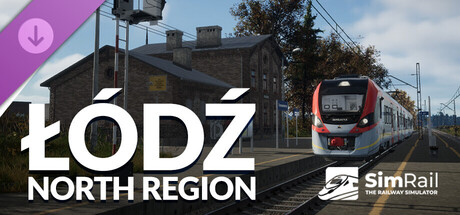
SimRail - The Railway Simulator: Łódź North Region
Single-track lines teach you what double-track hides.
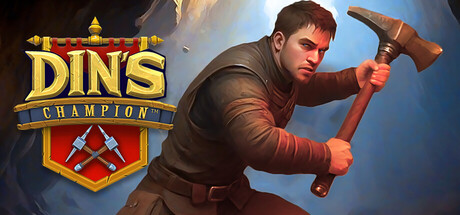
Din's Champion
The world doesn't wait for you—it just doesn't need your town-building to prove it.
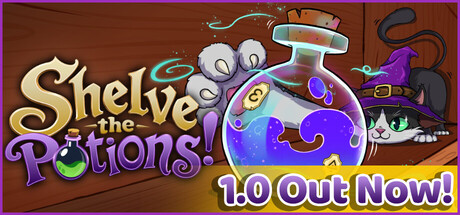
Shelve the Potions!
You're not organizing potions. You're solving the puzzles hidden in a witch's workshop, then putting the bottles away.
Deep editorial analysis
The gap between what Master Healer Kale advertises and what it delivers is deliberate. The title suggests you're stuck healing a disaster. In reality, you're conducting a broken orchestra: a sleeping tank who deals zero damage until you invest in him, a toxic DPS with stat imbalances, a newbie mage, and yourself—the only competent actor on stage. Players who expect a pure healing game feel misled; players who approach it as an incremental with a healer skin discover something sharper.
What makes this work is pacing. The skill tree doesn't overwhelm—abilities unlock at a rhythm that lets you experiment with interactions before you're drowning in options. By hour three, you're not grinding frantically. You're problem-solving: which upgrade path breaks the game open? Should you make the tank unkillable or boost your own spell damage? Can you make the DPS focus the right targets?
English-language reviews consistently identify the same satisfaction: control. One WoW healer noted that the game replicates the genre-specific pleasure of reactive support—watching health bars drop and having the power to save someone. Another praised the fact that it doesn't feel like there's one correct build path; the skill tree stays tactical without being rigid. The nightmare mode challenge confirms this isn't a freeform idle game—it demands timing and spell selection.
The honest objections in the positive reviews are revealing. Several players note the game is genuinely short (4–7 hours for 100%), yet frame this as a feature: it's a complete experience sold at a coffee price. A few mention the skill tree includes dead upgrades that don't meaningfully contribute, and the balance between party members can be exploited to trivialize content (especially the tank). But these notes don't kill engagement—they're observations from players who finished anyway and wanted more.
The negative reviews (9% of the sample) split into three camps. Two report genuine bugs—spell freezing late-game that bricks progression. One argues the game misrepresents itself as a healing game when it's actually a buffing and DPS simulator. One found it boring and grindy. These are real frictions, but they represent outliers in a sample where consistency is the dominant signal.
German and French reviews add cultural specificity without contradicting the English consensus. French speakers who played MMO healers describe specific nostalgia: watching health bars drop and having the power to save someone, exactly what one English reviewer noted independently. German players emphasize the price-to-content ratio and lack of mandatory grind—you can 100% without excessive farming. Both language groups express appetite for more difficulty tiers and post-game content, suggesting the core is solid but the package feels complete, not unfinished.
The incremental game community appears to have discovered this title through word-of-mouth (several mention Idle Cub and streamers). This community is accustomed to samey progression loops, and players explicitly state this one feels fresh. The skill tree design is praised as genuinely creative—not filler padding but interactions worth exploring. One reviewer who plays many cheap incremental games called this one exceptional, not just good-for-the-price.
No recurring technical complaints appear outside the spell-freeze bug. No complaints about art, story, or audio design. No friction on difficulty curves outside one outlier noting imbalance between party members. The most common honest complaint is length—the game is short and you can see it coming—but players frame this as appropriate for the price point and designed scope, not as a deficiency.
Signal data
% positive reviews
Under-the-radar potential
Store framing vs player language
Voice and personality in reviews
Would a stranger click buy?
1,788 reviews currently indexed
60 analyzed · english, german, french
Last synthesized: Jul 7, 2026 · 60 reviews in that synthesis
Revlize indexed this signal before it reached scale.
7/3/2026 · 29 reviews
1,788 reviews
+6066% · +1,759
Why it entered the radar: hidden gem.
This timeline records correlation only. Revlize does not claim to have caused later growth.
Review sampling, evidence boundaries and public-signal methodology.