


KAZ
A game so small it fits in your hands—and so demanding it destroys them.
KAZ is a 4-button arcade roguelike where you tap colored squares under time pressure, dodge traps, and build runs by choosing from 110+ items and 25+ character themes. Each run lasts 10–15 minutes across 25-second rounds. It's designed for quick dopamine cycles and leaderboard climbing.
KAZ's official pitch nails the core appeal—score-chasing arcade action in quick bursts—but players are actually talking about something narrower and more physical: a game that hijacks your hands into compulsive motion until they hurt, and makes you come back anyway.
Players across all three languages describe hand and wrist pain as the primary side effect of play, and frame it as a mark of the game's success, not a problem. The pain is real; the addiction is real; they coexist.
French reviewers specifically emphasize the easy to play, hard to master curve and the social/competitive angle (leaderboards, unlocking characters), while English reviews lean heavier into the physical compulsion and dopamine loop language.
The game's simplicity—four buttons, 15-second rounds, instant feedback—is mentioned as its greatest strength, not a limitation. Reviewers see minimal mechanics as a prerequisite for the intensity.
The game's physical demand is intentional and celebrated by players, not a barrier they overcome. No recurring complaints about bugs, balance, or design appear in the sampled reviews. The only friction is the one the game creates: the need for speed and the wear on your hands from extended play. Players treat this as a feature, not a flaw.
See the game in motion.
KAZ is a minimalist 4-button arcade roguelike built for score chasers and quick dopamine hits, with 145 quests, 25+ themes with unique abilities, 110+ items, and 5 game modes to master.
A deceptively simple grid-tapping game that becomes physically demanding the moment you start optimizing. Players describe it as addictive, hand-destroying, and impossible to stop playing—and they love it for exactly that reason. The rapid progression and variety of unlockables make it feel fresh across runs, and the leaderboards give you a reason to push harder.
“Tons of content to unlock, fun gameplay, and easy to understand but hard to master mechanics.”
“KAZ est un jeu très facile à prendre en main mais où vous ne cesserez jamais de vous améliorer et qui rentre dans cette fameuse catégorie de jeu "easy to play, hard to master" avec ce petit goût de reviens-y.”
“Already had 6 bucks worth of fun in 40 minutes this morning.”
“The roguelite aspect is very interesting and the arcade gameplay is really satisfying.”
Sentences extracted from highest-voted public Steam reviews. Unedited.
27 public Steam reviews analyzed across 3 languages.
Synthesized from public Steam reviews. Not affiliated with Valve Corporation.
Player-language signals, not generic review scores.
Best for
- —Score-chasers and leaderboard competitors who want constant feedback and measurable progression.
- —Players looking for a quick arcade fix between other games—10-15 minute runs mean you can actually finish a session.
- —Anyone comfortable with arcade-style physical demand; hand-intensive games that don't punish you for speed, but do require it.
English reviews emphasize the physical toll and dopamine loop, using humor to frame the hand pain as a badge of honor. The tone is self-aware and celebratory about the game's compulsive intensity. Reviewers often pair descriptions of injury with genuine gratitude, treating the physical demand as evidence of the game's power.
French reviews foreground the competitive and social elements more than English reviews—leaderboards, ranking position, character unlocks, and the easy to play, hard to master progression curve are mentioned as primary appeals. Reviewers also emphasize the overnight play sessions and the impossibility of stopping, but frame it as a positive addiction tied to clear progression goals rather than pure dopamine chasing.
More games with overlapping community patterns.
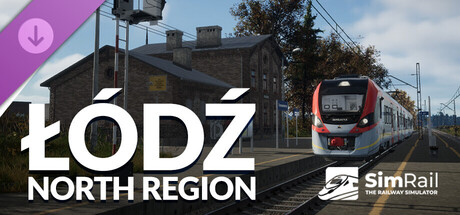
SimRail - The Railway Simulator: Łódź North Region
Single-track lines teach you what double-track hides.
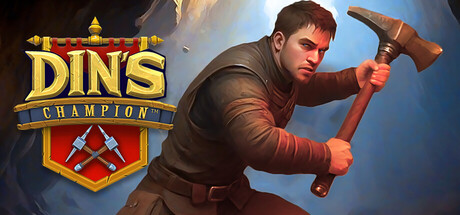
Din's Champion
The world doesn't wait for you—it just doesn't need your town-building to prove it.
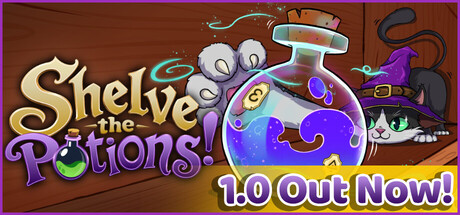
Shelve the Potions!
You're not organizing potions. You're solving the puzzles hidden in a witch's workshop, then putting the bottles away.
Deep editorial analysis
KAZ sells speed and simplicity in its marketing, and that's exactly what it delivers. But what players are actually experiencing is something more primal: a game that makes you move faster and faster until your body files a complaint, and then you play again anyway.
The recurring language across reviews is physical and urgent. Players describe hand cramps, broken fingers, wrist damage, and—crucially—genuine gratitude for it. Not ironic gratitude. Real appreciation. One reviewer played for 40 minutes, decided it was worth six dollars despite the pain. Another opened by joking about a lawsuit, then admitted they abandoned their original reason for buying the game because the arcade loop was stronger. A third compared it to a carpal tunnel speedrun and gave it 10/10.
This is not typical arcade enthusiasm. This is the language of a game that creates a specific kind of friction—not a design flaw, but a feature of the physical demand. The grid-based movement, the 15-second timer, the constant need to read and react: it all combines into something that occupies your hands completely. Players who enter that state describe it as addiction, dopamine farming, a compulsion to run one more time.
The official description uses words like flow, lightning reflexes, and flashy visuals. Those are true, but they're selling the game from the outside. Players are selling it from inside the loop: the simplicity hooks you, the timer keeps you moving, and the variety (145 quests, 110 items, multiple modes) gives you an endless reason to come back. The progression curve is gentle enough that you can grab it between meetings, but steep enough that you'll feel yourself improving. The music is reactive to your score, so better play actually sounds better.
French reviewers specifically highlight the easy to play, hard to master design and emphasize how impossible it is to stop once you start. Multiple reviews mention playing through the night. One player ranked top 3 on the leaderboard and seemed surprised by their own dedication. The tone is consistent: this game is a trap, and it's worth it.
English reviews add a layer of self-aware humor about the physical toll. The damage is real, but the joke is that you'll accept it. That's the actual sell: not a game that punishes you, but a game that demands so much movement that you legitimately hurt, and you still want to hit run again. Reviewers are not complaining about accessibility or design friction—they're celebrating the fact that the game is intense enough to have physical consequences, and those consequences don't stop them.
No recurring technical complaints appear in the sample. No reports of bugs, performance issues, or balance problems. The only friction is the one the game intentionally creates: the demand on your hands and your attention. Players are not forgiving rough edges; they're not encountering them. This is a polished arcade loop that knows exactly what it's doing.
Signal data
% positive reviews
Under-the-radar potential
Store framing vs player language
Voice and personality in reviews
Would a stranger click buy?
151 reviews currently indexed
27 analyzed · english, french, japanese
Last synthesized: Jul 14, 2026 · 27 reviews in that synthesis
Revlize indexed this signal before it reached scale.
7/14/2026 · 39 reviews
151 reviews
+287% · +112
Why it entered the radar: niche breakout.
This timeline records correlation only. Revlize does not claim to have caused later growth.
Review sampling, evidence boundaries and public-signal methodology.
Frequently asked
A typical run lasts 10–15 minutes, made up of 25-second rounds. This structure lets you finish a full game session quickly or chain multiple runs together.
Yes, if you play extended sessions. The game demands fast, repetitive hand movement. Reviewers acknowledge and celebrate this as a sign of the game's intensity. If you have pre-existing wrist pain, avoid it.