


Junkster
A building game that doesn't run out of ideas before you run out of levels.
Junkster is a 3D puzzle platformer where you collect junk pieces and assemble them into platforms, vehicles, and contraptions to solve environmental puzzles and progress through levels. You play as UM, a construction bot recovering his crashed ship. The game emphasizes creative problem-solving over reflexes, with a comic book visual style and a deliberately limited toolset that encourages experimentation within constraints.
Junkster doesn't hide what it is—the official framing and player consensus align on a straightforward pitch: a building-focused puzzle platformer with strong charm and polish. The real story is that players are forgiving its mechanical repetition and deliberately narrow scope because the core building fantasy is tactile and joyful enough to carry five hours without wearing thin.
Polish and care matter more than scope. Every review that mentions specific details—reversing beeps, entry animations, fluid controls, chill music—frames these as evidence the developers went the extra mile. For a five-hour game, this level of feedback design signals intention and respect for the player.
The game's constraint is its strength. Rather than hide its narrow scope or limited difficulty, it leans into it. Players describe this as 'fresh' and 'surprising,' which suggests they're used to indie games that try to do too much. Junkster's refusal to bloat itself reads as maturity.
Accessibility and relaxation are actively desired, not apologized for. No reviewer frames the low difficulty as a drawback. Instead, it's positioned as a feature—perfect to chill out, good for people without experience in the genre. This is audience alignment, not a compromise.
The same pieces—particularly the longest blocks—carry most of the puzzle-solving weight. This isn't a flaw, but it does mean the building toolset is narrower than the word building might suggest. The game introduces multiple mechanics throughout, but then doesn't revisit them, which some players read as missed potential. The difficulty is intentionally low, so there's no progression curve to chase. If you're looking for a game that escalates challenge or complexity, Junkster deliberately opts out.
See the game in motion.
Junkster is a 3D action platforming adventure with a unique building mechanic. You're UM-13, a construction bot on a junkyard planet, armed with a robo-wrench. You collect garbage and transform it into functional creations—platforms, vehicles, contraptions—to repair your crashed ship and recover cargo. Presented in a retro 80s comic book style, the game pairs action platforming with environmental puzzle-solving.
A polished, creative puzzle platformer that leans heavily on the building mechanic rather than reflexes or combat. Players frame it as an accessible introduction to platformers or a chill experience for genre veterans. The charm comes from the presentation and the tactile feel of assembling junk into solutions. One reviewer specifically connects it to Zelda's shrine puzzles. Another compares it to PS2/Gamecube-era 3D platformers. The consensus is that it's a short, well-paced experience (around five hours) that respects your time by not overstaying its welcome. No one frames it as deep or mechanically innovative, but multiple reviewers praise its polish and intention. The developer framing and player emphasis largely align: it's advertised as a building-focused platformer with comic book style, and that's what players found and valued.
“I'm not super far through it (played a few levels) but I can tell this is going to be exactly my kind of jam.”
“Only through the first level but first impressions are...”
“A very clever game with much charm and creativity.”
“There are a lot of good ideas and gimmicks within this game that it indroduces once and then never does anything with them.”
Sentences extracted from highest-voted public Steam reviews. Unedited.
19 public Steam reviews analyzed across 3 languages.
Synthesized from public Steam reviews. Not affiliated with Valve Corporation.
Player-language signals, not generic review scores.
Best for
- —Players who want a puzzle-platformer without the reflex demand. Accessibility-conscious gamers or platformer newcomers.
- —Genre veterans (especially those who played PS2/Gamecube platformers) who want a comfort experience that doesn't waste their time.
- —Anyone who values polish and charm over mechanical depth or difficulty scaling. People who play games to relax.
English reviews establish the core pitch clearly: this is a building-focused puzzle platformer with strong charm and polish. The framing is consistent across the sample. Multiple reviewers specifically compare it to shrine puzzles (Zelda) or PS2/Gamecube platformers, grounding the experience in recognizable reference points. Price is mentioned positively as a value proposition. The pattern is straightforward endorsement with honest acknowledgment of narrow scope.
More games with overlapping community patterns.
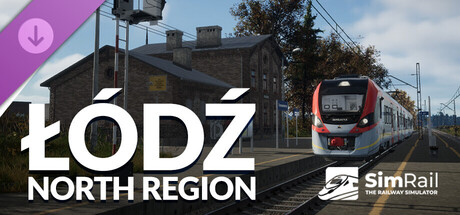
SimRail - The Railway Simulator: Łódź North Region
Single-track lines teach you what double-track hides.

Din's Champion
The world doesn't wait for you—it just doesn't need your town-building to prove it.

Shelve the Potions!
You're not organizing potions. You're solving the puzzles hidden in a witch's workshop, then putting the bottles away.
Deep editorial analysis
The gap between Junkster's official framing and player reality is minimal, which is worth noting. The developer promises a building-focused platformer with comic book charm, and that's exactly what players found. What makes this interesting is not a mismatch but a clarity: in a landscape of games that pile on mechanics to justify their scope, Junkster does the opposite. It introduces an idea per level, executes it cleanly, and moves on. Players repeatedly describe this as fresh and surprising, which suggests they're experiencing something they didn't expect to enjoy this much from such a straightforward pitch.
The building mechanic itself is the gravitational center. One reviewer compared it to the shrine puzzles in Breath of the Wild and Tears of the Kingdom—recognition that the core loop (gather pieces, arrange them, test, adjust) scratches an itch that stretches beyond traditional platformers. Another notes you can modify your approach, suggesting the solutions don't have a single correct answer, which converts what could be a rigid puzzle game into something more exploratory.
What players admit, honestly, is that Junkster relies heavily on the same pieces—longer blocks tend to do the work—and some ideas introduced mid-game never resurface. One review frames this directly: There are a lot of good ideas and gimmicks within this game that it introduces once and then never does anything with them. This isn't rage. It's observation. The same reviewer still recommends it. This is the signal that matters: players understand the game's constraint, accept it as intentional design rather than laziness, and value the five-hour journey enough to forgive the unrealized potential.
The difficulty is deliberately low, which the developer doesn't advertise but players keep mentioning. This is framed as a feature. One reviewer calls it perfect to chill out. Another notes the learning curve is gentle without being too punishing. No one frames this as disappointing. Instead, it reads as intentional accessibility—the game knows it's a puzzle platformer first and a challenge second.
Price signal is consistent and strong. Seven reviews mention value specifically, all positive. The framing is consistent: ridiculously good for how polished, for the price this is definitely worth it. The game released at a low price point, which appears to have been the right call. This isn't a hidden gem that's underpriced; it's a deliberately modest scope at a deliberately modest price, and players respect the alignment.
One specific detail: the presentation work. The comic book aesthetic isn't just window dressing in these reviews. Players mention chill music, funny animations, fluid controls, the multiple level entry animations, reversing beeps on your constructed vehicles. This level of polish detail appearing across reviews suggests the developer spent real effort on feedback loops and juice. For a five-hour experience, that matters disproportionately.
The low difficulty, narrow building toolset, and five-hour scope are not things players are overlooking to reach a deeper game underneath.
Signal data
% positive reviews
Under-the-radar potential
Store framing vs player language
Voice and personality in reviews
Would a stranger click buy?
59 reviews currently indexed
19 analyzed · english, russian, japanese
Last synthesized: Jun 20, 2026 · 19 reviews in that synthesis
Revlize indexed this signal before it reached scale.
6/20/2026 · 21 reviews
59 reviews
+181% · +38
Why it entered the radar: hidden gem.
This timeline records correlation only. Revlize does not claim to have caused later growth.
Review sampling, evidence boundaries and public-signal methodology.
Frequently asked
Most players complete Junkster to 100% in around five hours. Levels are short and tightly designed with no filler.
The game includes approximately 20 main levels. It's deliberately scoped as a short, focused experience rather than a sprawling adventure. New players and veterans both find this satisfying.