


Grand Cru: The Wine Maker
You're not making wine. You're rationing your time to keep the operation from collapsing.
Grand Cru is a winery management sim where you plant vineyards, decide oak aging, ferment wines, and sell to critics or the public. The game models terroir, weather variation, and wine quality scoring across multiple seasons. It's early access and has a responsive developer.
Grand Cru's official pitch emphasizes decision-making depth across the wine production chain, but players consistently report that the game's real hook is the compulsive loop—the 'one more turn' rhythm where you're managing scarcity (action points, inventory, market position) rather than making grand viticultural choices.
English-speaking players emphasize the compulsive just one more turn rhythm and express surprise at the depth hidden inside a simple interface; several report losing track of time.
Korean players recognize that apparent simplicity masks strategic complexity, and specifically praise the developer's responsiveness and ongoing polish. One Korean reviewer notes that tasting room decoration lacks mechanical benefit and feels optional.
German players highlight the atmosphere and lack of pressure as a primary draw—this is a rare game where slow pacing is celebrated rather than tolerated.
The action point economy creates a hard resource cliff after your second property. Players consistently report that once you scale beyond two vineyards, each turn demands more actions than points allow. Some describe this as intentional tension; others experience it as a wall that forces them to reset or abandon the save. A secondary friction appears late-game: the sell button migrates below the screen boundary as cellar inventory grows, making sales impossible without workarounds. These are not universal complaints across the sample, but they recur specifically in players who attempt to expand their operation.
See the game in motion.
From Grape to Glass, Every Choice Matters. The game emphasizes decision-making across vineyard terroir, oak barrel selection, and the Four Pillars of Quality (Structure, Authenticity, Finish, Complexity), with distinct scoring paths for critics versus public taste.
A deceptively simple winery tycoon that gets harder as you scale. Once you understand the scoring, you're no longer playing viticulture—you're playing clock management. The depth creeps up on you.
“Hoping that they continue to develop and expand the base game of making wine, and all the nuances that go into making great wine.”
“It helps to support to decision making in the game, but sometimes without realising I am left with zero points and still need to do winery work like wine making.”
“Auch das Action-Point-System wirkt eher wie eine künstliche Begrenzung und bremst den Spielfluss aus.”
“This is the game I've been searching for my whole life as a wine lover 🍷 A wine-making management sim that actually gets it right — fermenting, oak barrel aging, buying properties, blending… I literally lost track of time.”
Short verbatim excerpts selected from the analyzed public Steam review sample for their relevance to the analysis above.
29 public Steam reviews analyzed across 3 languages.
Synthesized from public Steam reviews. Not affiliated with Valve Corporation.
Player-language signals, not generic review scores.
Best for
- —Tycoon and business simulation players who want a slower, meditative loop instead of frantic optimization.
- —Wine enthusiasts who want mechanical accuracy without requiring wine knowledge to enjoy the game.
- —Players who like 'one more turn' loops and don't mind grinding through UI friction to unlock late-game content.
English reviews frame the game as a compulsive time sink that surprises with hidden depth. This language group is most likely to compare it to other sims and note the 'one more turn' loop as the primary hook. They are also most vocal about action point scarcity as a friction point that forces restart or resignation.
Korean reviews emphasize deceptive simplicity and developer responsiveness with notably greater specificity than other languages. One reviewer provided detailed feedback on sales broker UI (preferring finer control over automatic bulk selling). The sample also notes that late-game gameplay 'loosens' but frames it as acceptable given ongoing updates. No major friction appears in this limited sample, but the tone suggests players are evaluating the game as an evolving product rather than a finished one.
German players single out the meditative pacing and absence of pressure as primary strengths—this is nearly inverted from the English framing of high-pressure time management. German reviews emphasize atmosphere and music as integral to the experience. One reviewer flagged a critical save-game overwrite bug, which appears unique to this language sample and suggests either a localized issue or different save behavior in that region.
More games with overlapping community patterns.
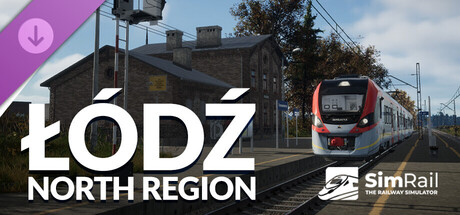
SimRail - The Railway Simulator: Łódź North Region
Single-track lines teach you what double-track hides.

Din's Champion
The world doesn't wait for you—it just doesn't need your town-building to prove it.
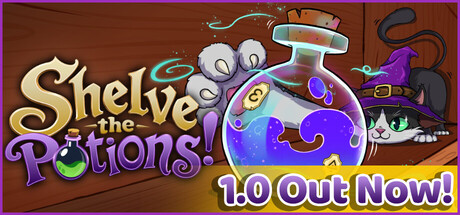
Shelve the Potions!
You're not organizing potions. You're solving the puzzles hidden in a witch's workshop, then putting the bottles away.
Deep editorial analysis
The official description wants you to think about terroir and oak barrels as independent variables you're optimizing. Players report something different: once you understand the scoring, the game becomes a resource constraint puzzle. You have 20 action points per turn. Harvesting, fermenting, bottling, selling, and managing three vineyards demands at least 30. The win condition isn't mastering viticulture—it's deciding which tasks to skip. English-speaking players call this addictive. Korean players frame it as deceptively deep: the simplicity is the trap. German players appreciate the rhythm itself, the absence of pressure. The one concrete friction that appears across languages is UI scaling: as your cellar grows, the sell button vanishes below the screen edge, making late-game sales impossible. Developers acknowledge the action point bottleneck as intentional friction, but some players experience it as a hard wall rather than tension.
Signal data
% positive reviews
Under-the-radar potential
Store framing vs player language
Voice and personality in reviews
Would a stranger click buy?
37 reviews currently indexed
29 analyzed · english, koreana, german
Last synthesized: Aug 20, 2026 · 29 reviews in that synthesis
Revlize indexed this signal before it reached scale.
8/20/2026 · 34 reviews
37 reviews
+9% · +3
Why it entered the radar: hidden gem.
This timeline records correlation only. Revlize does not claim to have caused later growth.
Review sampling, evidence boundaries and public-signal methodology.
Frequently asked
Wine knowledge is not required. Players repeatedly note that the game teaches you what you need to know through play. The satisfaction comes from managing the business, not from understanding Bordeaux history. Several reviewers mention coming in with no wine interest and becoming hooked anyway.
Visuals are rough (some AI-generated backdrops), and late-game UI scales poorly (sell button moves off-screen as inventory grows). However, the core loop is solid, the developer patches regularly, and players report the friction is tolerable given the depth underneath.
It depends on your region. English players frame it as a compulsive treadmill; German players celebrate it as meditative and pressure-free. Both are accurate—the pacing is deliberate, but the scarcity mechanics create urgency.