


Geneforge 5: Overthrow
The series' most mechanically complete chapter arrives as its most exhausting one.
Geneforge 5: Overthrow is the final installment in Spiderweb Software's classic indie RPG series. You create a custom character with one of nine classes, command an army of genetically engineered creatures, and navigate a 80+ area war-torn world while choosing between five factions. Turn-based combat emphasizes stealth, diplomacy, and tactical creation management alongside direct combat, with dozens of endings determined by your faction allegiances and moral choices.
Geneforge 5 markets itself as choice-driven fantasy RPG finale, but what it actually delivers to long-term fans is a complicated farewell—mechanically solid and narratively rich, but the slowest and grindiest entry in the series, testing whether legacy carries a game to the finish line.
Series veterans consistently frame this as farewell closure rather than standalone entry, repeatedly referencing how returning characters, lore callbacks, and faction ideologies reward 25+ years of series continuity—the game's strength is recognition, not discovery
Across the sample, players note the game excels at enabling player agency through nonlethal, stealth, and diplomatic approaches to problems, making combat avoidance feel mechanically legitimate rather than a workaround
The slower pace and grinding are openly acknowledged even by positive reviewers as deliberate design tradeoffs; fans accept this as acceptable cost for the scope and reactive writing, while critics view it as the game prioritizing breadth over pacing
The analyzed reviews identify two recurring friction points: mechanical grinding and narrative caution. Multiple reviewers report that health pools are disproportionately high, especially on Torment difficulty, turning late encounters into endurance tests rather than tactical puzzles. The story demonstrates strong reactive writing tied to faction choice, yet the finale settles into safer narrative territory than earlier entries suggested—the sample shows this as a structural tension for committed fans rather than failed promise. Technical issues surface only sporadically across the sample (one report of spontaneous character death, UI font readability concerns), with no single bug pattern emerging as systemic.
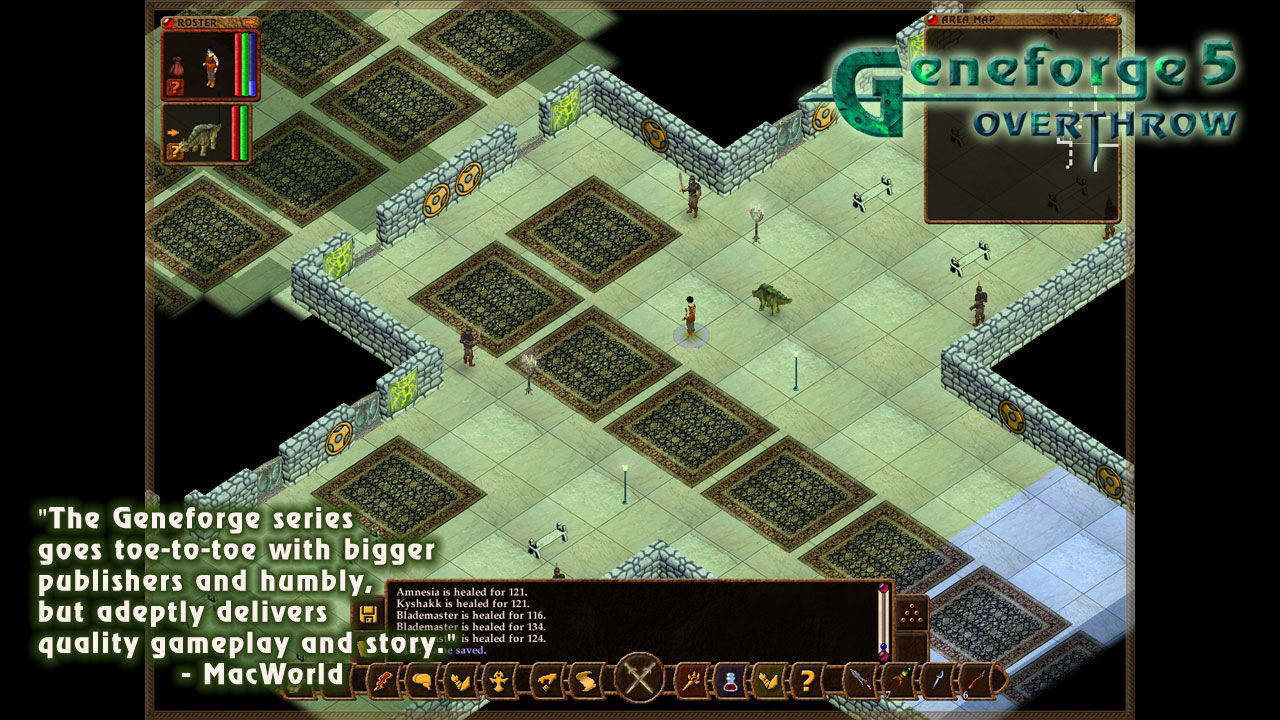
Geneforge 5: Overthrow is the epic conclusion to the Geneforge Saga, featuring nine character classes, 80+ explorable areas, five rival factions with distinct ideologies and endings, and a world where your choices through combat, stealth, or diplomacy determine the final outcome across dozens of possible conclusions.
Long-term series fans emphasize the depth of returning lore, the mechanics that allow nonlethal and stealth-based playstyles, creature creation and synergy systems, and the emotional weight of experiencing the series finale. They acknowledge the game is slower and grindier than earlier entries but frame this as acceptable tradeoff for narrative scope. Some newcomers resist the presentation but note that mechanical depth and story substance justify engagement. Critics note the game's final chapter status creates bittersweet reception—it's strong work from a studio that defined the indie CRPG landscape, but not the triumphant capstone some hoped for.
“It's the slowest, grindiest, and most RNG-dependant game of the pentalogy, with a story that disappointingly limps to the finish line.”
“Geneforge 5: Overthrow serves as the dramatic finale to Spiderweb Software's beloved fantasy RPG series, delivering a sprawling adventure centered on rebellion, ideology, and the consequences of playing god.”
“The Geneforge remake (if developer Jeff has it planned, which hopefully he does) couldn't come sooner, have been waiting for it for some time now.”
“In all the geneforge saga is one of if not the best game series' I have ever played in my life.”
Short verbatim excerpts selected from the analyzed public Steam review sample for their relevance to the analysis above.
31 public Steam reviews analyzed across 3 languages.
Synthesized from public Steam reviews. Not affiliated with Valve Corporation.
Player-language signals, not generic review scores.
Best for
- —Series veterans seeking closure and narrative payoff on 25+ years of lore
- —Tactical RPG players who prioritize creature synergy and build optimization over visual polish
- —Players comfortable with slow-burn storytelling and 200+ hour campaigns
English reviewers emphasize series continuity and emotional closure, comparing Geneforge 5 to classic CRPGs (Fallout 2, Infinity Engine titles) to establish its legitimacy. They openly discuss both mechanical fatigue and narrative caution as conscious tradeoffs, suggesting a community comfortable with deliberate design compromise in service of scope. Several reviewers explicitly recommend waiting for the Geneforge 1 remake for newcomers.
More games with overlapping community patterns.

Signal data
% positive reviews
Under-the-radar potential
Store framing vs player language
Voice and personality in reviews
Would a stranger click buy?
123 reviews currently indexed
31 analyzed · english, schinese, russian
Last synthesized: Jul 21, 2026 · 31 reviews in that synthesis
Review sampling, evidence boundaries and public-signal methodology.
Frequently asked
No. Players consistently recommend waiting for the Geneforge 1 remake currently in production, or playing Geneforge 2 first. Geneforge 5 is built as a farewell for series veterans and assumes 25 years of lore familiarity. Starting here will leave you narratively lost and mechanically overwhelmed.
On Torment difficulty, yes—but the challenge comes from enemy health pools being inflated rather than tactical complexity. The game's real difficulty is the grinding required to reach lategame scenarios. Nonlethal and stealth approaches offer valid alternatives to direct combat.
200+ hours if you play the full package. Reviewers note the game is on sale 90% of the time, making it one of the longest value propositions in indie RPGs.
The game features dozens of endings determined by which of five factions you align with and the moral choices you make throughout. Each faction route offers distinct endgame questlines and ideological conclusions.
Yes. Stealth, diplomacy, and infiltration-based approaches are mechanically viable throughout the campaign. The game was designed to let you avoid direct combat if you invest in the right skills.