


Flaregate Network
The card game works. The reasons to keep playing don't.
Flaregate Network is a roguelike deckbuilder where you play cards that spawn ships, structures, and actions onto a battlefield, then watch them execute in real time. The dev evolved this from a free Starcraft 2 arcade custom map called Keystone into a standalone game with a story campaign and roguelike mode.
Flaregate Network's hybrid deckbuilder-RTS identity is mechanically sound, but players consistently report that the roguelike's content depth doesn't justify repeated runs—a gap between what the core system can do and what the game currently asks you to do with it.
Positive English reviews spend significant text praising the core loop's originality and the satisfaction of seeing strategies execute, but even these reviews often include hedging language ('could be,' 'has potential') that signals awareness of incompleteness.
Negative reviews consistently concede that the underlying card game is strong or 'amazing' before pivoting to complaints about content, replayability, or price—indicating frustration with under-delivery rather than fundamental design failure.
The roguelike mode dominates player discussion in reviews; the story campaign barely registers except as disappointment, suggesting it was neither the intended focus nor executed with sufficient depth to serve as an alternative draw.
The roguelike's content depth doesn't scale with replayability. After one or two wins, the finite card pool and limited build paths become visible; subsequent runs feel like reshuffling the same options rather than discovering new strategies. Players report that card variety is constrained, the tech tree unengaging, and RNG card draws between missions can feel arbitrary rather than challenging. This isn't a mechanical failure—the core system works—but a content pacing issue that punishes players who love the first 10 hours and want 20 more.
See the game in motion.
Flaregate Network is a roguelike deckbuilder with RTS-inspired spaceship combat. You play cards to deploy units, structures, and actions; battles resolve in real time. Build varied decks or focus on single strategies. Learn the damage type system to counter enemy fleets.
A rare hybrid that actually works: card drafting paired with real-time fleet combat. Mechanically fresh, easy to learn, deeper than it first appears. But content scarcity and a small card pool make the roguelike feel thin after the first win, and the $15 price feels steep for 12–20 hours.
“The gameplay itself is pretty straightforward.”
“Flaregate network is game whose gameplay originates from a Starcraft 2 arcade by the same creator.”
“The dev obviously has passion and dedication, their discord server is active, and they still update Keystone which was the mod that this is the stand alone game for.”
“The storyline isn't anything groundbreaking, and many of its themes feel familiar, but it's intriguing enough to keep me invested and wanting to see what happens next.”
Sentences extracted from highest-voted public Steam reviews. Unedited.
24 public Steam reviews analyzed across 3 languages.
Synthesized from public Steam reviews. Not affiliated with Valve Corporation.
Player-language signals, not generic review scores.
Best for
- —Starcraft 2 custom map veterans and anyone familiar with Keystone who wants to see the concept refined into a polished standalone form.
- —Players who value mechanical novelty and innovation over content breadth, and are satisfied with 10–20 hours of focused, non-repetitive play.
- —Deckbuilder fans curious about hybrid systems and willing to forgive thin end-game content for a genuinely different core loop.
English reviews show consistent recognition of the Keystone lineage and appreciation for the developer's intent. They praise the core loop's originality and often acknowledge the game's potential while admitting current content limitations. Even negative English reviews concede the strength of the underlying system before critiquing scope and replayability. This suggests English-speaking players have context (prior exposure to Keystone or awareness of the developer's previous work) that shapes their tolerance for early-access-like thinness.
More games with overlapping community patterns.
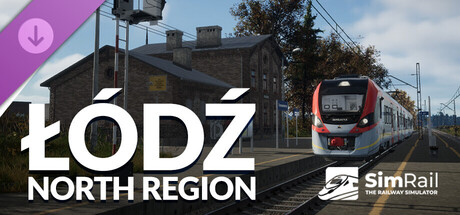
SimRail - The Railway Simulator: Łódź North Region
Single-track lines teach you what double-track hides.
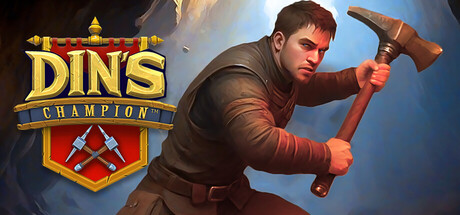
Din's Champion
The world doesn't wait for you—it just doesn't need your town-building to prove it.

Shelve the Potions!
You're not organizing potions. You're solving the puzzles hidden in a witch's workshop, then putting the bottles away.
Deep editorial analysis
Flaregate Network lands a genuinely uncommon marriage of mechanics: deckbuilder deck construction paired with real-time RTS execution. You build a fleet by playing cards (units, structures, actions), watch them deploy next turn, then observe the battle resolve in real time without further input. The moment-to-moment gameplay reads as fresh because most deckbuilders stop at the card play; Flaregate adds an execution layer that feels like watching your strategy work—or fail—in fast-forward.
English-language reviews consistently praise this core loop. Players describe it as easy to pick up but offering hidden depth: timing decisions, opportunity cost, the discipline to reject powerful cards because they don't fit your current synergy. One reviewer noted that losing often feels earned—a misplay, not bad luck. The Starcraft 2 lineage (the dev's original mod was called Keystone) creates a small but vocal audience of veterans who recognize what the developer was trying to do and appreciate the translation to standalone form.
But the moment you finish a roguelike run, the gap widens. Players report that card variety feels thin, the tech tree uninspiring, and the roguelike's replayability hook hollow. One reviewer estimated 12 hours for a fresh player—and after that, runs blur together. The forced randomness of card drafts, combined with a small pool and single-use-per-card constraints, means subsequent runs don't feel like exploring new strategies so much as watching familiar options recombine. The campaign mode, positioned as a story-driven tutorial, is described as slow to open up and railroaded, which leaves the roguelike as the intended long-term hook—except the roguelike appears designed for novelty, not endurance.
Price amplifies the friction: at $15, players pricing in 12–20 hours of content feel cheated by a roguelike that offers breadth via randomness rather than depth via design. The core gameplay system is strong enough that several negative reviews spend most of their text saying so before concluding the game doesn't justify the ask. This is not a case of a broken system; it's a case of a system built for shorter, broader appeal that lands hard with early-adopters but hasn't yet accumulated the card pool, build variety, or content roadmap that would make repeated runs feel distinct.
The developer is active—reviews mention an engaged Discord, ongoing updates to Keystone, and clear passion. But the game launches without the depth signal necessary to carry players past the first 10–15 hours. It's not unfinished; it's narrow.
Signal data
% positive reviews
Under-the-radar potential
Store framing vs player language
Voice and personality in reviews
Would a stranger click buy?
58 reviews currently indexed
24 analyzed · english, russian, french
Last synthesized: Jul 12, 2026 · 24 reviews in that synthesis
Revlize indexed this signal before it reached scale.
7/12/2026 · 24 reviews
58 reviews
+142% · +34
Why it entered the radar: unexpected depth.
This timeline records correlation only. Revlize does not claim to have caused later growth.
Review sampling, evidence boundaries and public-signal methodology.